
The Great (Pocono) Train Robbery
A 1900s ad campaign, a 1903 movie and the 1984 tear-up of the Lackawanna Cut-Off, and why bringing passenger trains back is so hard.
March 4, 2026 · 1 minute read
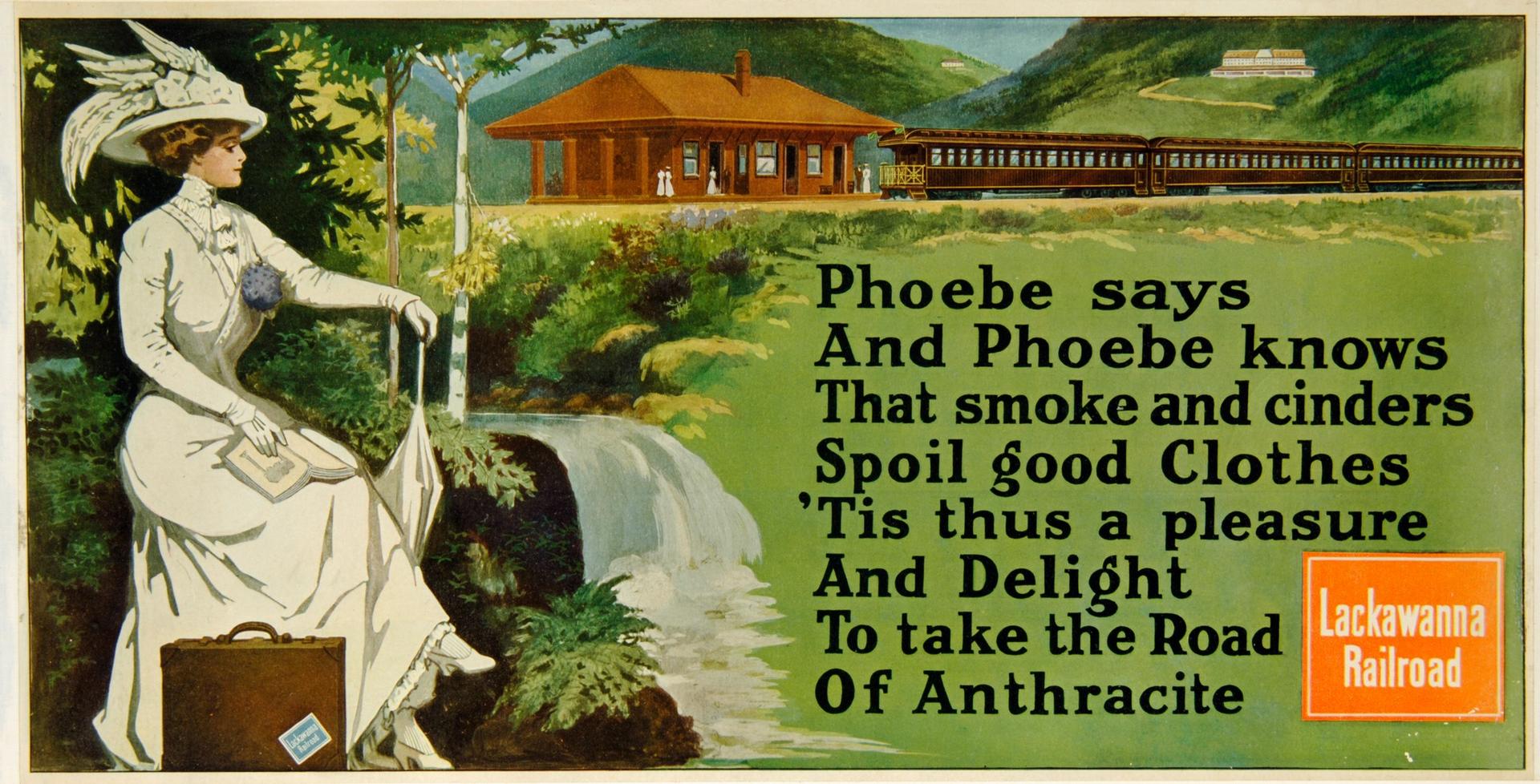
When we wrote in March about the plan to bring passenger trains from New York to Scranton, the price tag was about $200 million and the target was sometime in the 2030s. But did you know that much of that cost would not be necessary if not for what we call the Great (Pocono) Train Robbery of 1984?
The coal road
The Delaware, Lackawanna & Western (DL&W) railroad had been hauling coal through the Poconos since the 1850s. It also had a moment in Hollywood. In 1903, The Great Train Robbery, one of the first American action movies and an early Western, was shot along the Lackawanna's own line in New Jersey. That is the same railroad that ran through our mountains.
The Cut-Off
A few years after that movie was a hit, the railroad built the Lackawanna Cut-Off, a 28-mile shortcut across northwest New Jersey that ends near the Delaware Water Gap. Massive concrete viaducts carried a nearly flat, high-speed route over the valleys. It opened in 1911.
The woman in white
The railroad also realized it had a goldmine in tourism. Its ad men invented Phoebe Snow, a fictional traveler in a spotless white dress, to prove you would not get a speck of soot on you from the Lackawanna's clean-burning anthracite coal. The artwork was painted from a model, the actress Marion Murray Gorsch, according to the Monroe County Historical Association. The campaign ran until World War I. It was a brilliant marketing campaign for a luxury service built on the back of an industrial pipeline.
The Robbery of 1984
By the early 1980s the coal was gone and the line's owner, Conrail, wanted out. In 1984, the Cut-Off's tracks were pulled up and the right of way was sold to developers, even though counties in New Jersey and Pennsylvania had tried to buy the line. Those were high-speed tracks that a future passenger railroad could have used.
Today, we are told that rebuilding the line is "technically difficult." The truth? The Great (Pocono) Train Robbery of 1984 is why we're in this mess.
